Topfarmers

Ask me anything   Submit   Konzept   Ziele   Kernbereiche   Blue Economy®   Impressum   

Gemüse und Fisch von den Dächern Berlins.

twitter.com/Blue_Economy:


    The ZERI Foundation is producing a compilation of the life achievements of Prof. George Chan who has pioneered the integrated biosystems.

    He designed the ZERI projects in Namibia (beer brewery), Fiji (Montfort Boys Town), TECPAR (Brazil) and Gavilanes Farm (Colombia). He has been an inspiration and trained over one hundred ZERI practitioners.  A video on his work in Brazil has been posted on the web by Eric Fedus, and is based on the pioneering work by Alexandre Akira Takamatsu. For a first hand insight on these projects please click HERE.

    Watch a video about the life of George Chan

    Farming and Waste Management System (IFWMS)

    (Source: zeri-germany.de)

    — 1 year ago with 4 notes
    #George Chan  #Food  #Farming  #IFWMS  #Blue Economy 

    Die erste Ernte unserer Fische.

    Nach 4 Monaten können wir jetzt 15 KG Fische für unsere Weihnachtsfeier verarbeiten.

    Wir haben den Afrikanische Wels (Clarias gariepinus, engl. African Catfish) gezüchtet der vermehrt Einzug in deutsche Küchen und die gehobene Gastronomie findet!

    Somit geht eine erste Phase des Projekts Topfarmes erfolgreich in die nächste Stufe.

    Jetzt heißt es das Gewächshaus mit dem Fisch Treibhausverbund erfolgreich mit möglichst wenig externer Energie über den Winter zu bekommen um einen ganzjährigen Betreib zu gewährleisten.


    — 1 year ago
    WHAT DOES INTEGRATED FARMING SYSTEM DO?

    The Blue Economy TopFarmers based on the work of George L. CHAN  

    Looking back at the precarious and even risky situation in the farming activities worldwide, we see the poor farmers working hard to feed themselves and trying to make a living from their land, with some livestock and crops.  The  livestock manure fertilizes the crops, and the crop residues feed the livestock.  In order to produce more and improve the quality, they need costly inputs such as chemical fertilizers and artificial feeds, which make their farming activities uneconomic.  If they also have to remove the pollution they create, they will not be able to afford it.

    Those who added fish to the livestock-crop system have made a very big step forward, not only increasing the fertilizer from the fish wastes, but also enhanced their income from the bigger and quicker yield of fish and their relatively higher market prices.  The deeper pond resulted in higher fish productivity, with increased wastes and fertilizer value, but the pond can still be subject to pollution, if it receives too much wastes that deplete the limited dissolved oxygen.  By treating the livestock wastes anaerobically in digesters, with additional production of biogas energy, and aerobically in shallow basins, their amount can be increased ten-fold in the system, increasing the fertilizer and feed in the pond accordingly, but without using any of the dissolved oxygen. 

    Without such abundant, low-cost but much better inputs to improve the farming methods, we cannot expect high-quality produce and better yields.  Provided that all the extra nutrients and feeds are utilized to improve productivity, the benefits can only increase to make the farmers much more prosperous.  The energy can also help the farmers to process their produce for preservation and added value, reducing spoilage as well as increasing the overall benefits.  This is what the Integrated Farming System is all about.

    — 1 year ago
    #George L. CHAN  #Integrated Farming  #Food 
    Fisch und Kohl von Berlins Dächern. →

    Zitat aus dem Artikel: ” Das Aquaponic-System haben die drei Unternehmer schon mal getestet. Seit dem Sommer steht ein kleiner Gewächshaus-Container, liebevoll Rostlaube genannt, zwischen den Ziegelbauten der Malzfabrik. Erfunden wurde er an der Hochschule für Angewandte Wissenschaften in Zürich. “


    Wir freuen uns das das Design und Business Development von unseren Partnern Damien Chivialle und Cédric’Péchard so viel Anklang findet.

    — 1 year ago
    #Aquaponic-System  #Business Development  #Design  #food 
    "Markus Haastert from Zeri-Germany, a company that deal with sustainability, invited me to have a look at their aquaponic system. It is located in a rooftop in Berlin, inside a greenhouse. There is a big discussion if aquaponics really works. Now I can be sure, I have seen it myself! The temperature is still good, but soon the winter comes and they are planning to heat it up with photovoltaics. Great system, great results!"

    Valentina Karga  von der Univesität der Kunst Berlin.

    http://berlinfarmlab.tumblr.com/

    This blog is a research about systems for domestic production of all goods for contemporary living (electricity, biogas, food, biodiesel, heat, water).

    — 1 year ago
    #Zeri-Germany  #food 

    Unser Partnerprojekt: Chidos verwandelt organische Abfälle in gesunde Nahrung!

    Die Chido UG züchtet Speisepilze. Unsere Pilzzucht basiert hauptsächlich auf Kaffeesatz, doch wir nutzen auch andere landwirtschaftliche Abfälle je nach Verfügbarkeit vor Ort.

    Auch hier startete alles mit einem Workshop

    — 1 year ago with 24 notes
    #Chidos  #Pilze  #Workshop  #Food 

    Prototyp auf Berliner Dach

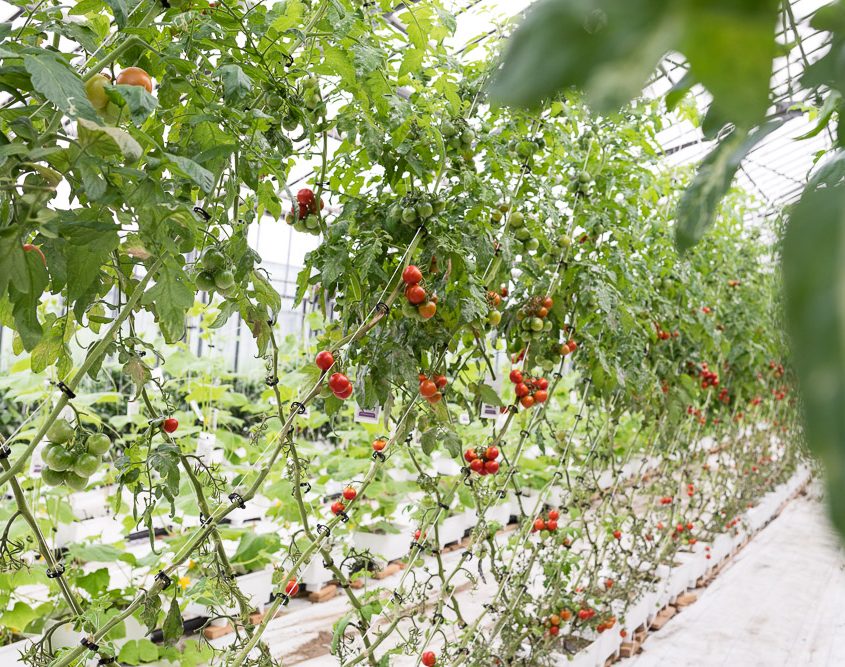
    After two months of research, prototype design, and installation, the rooftop  system located on the balcony of the Konvergenta office in Berlin is up and running.  The system installed is a modified version of the John Todd’s Four Cell Theory, with advice and participation of both national and international aquaculturalists.  The system utilizes a combination of a ‘flood and drain’ (also referred to in hydroponics literature as ‘ebb and flow’) and a ‘Nutrient Film Technique’ (commonly referred to as ‘NFT’) system for plant cultivation.

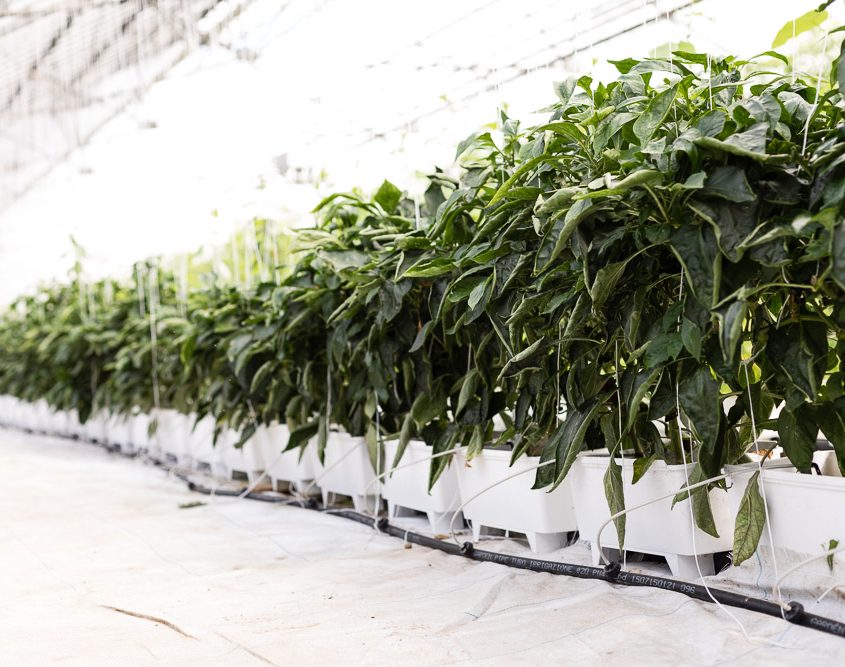
    The system currently supports one species of fish, Clarias gariepinus, and a variety of plants including tomatoes, cucumbers, sweet peppers, melons, and herbs.  The eventual goal is to construct a system that mirrors a natural freshwater ecosystem with a polyculture of both fish and plants, where all needs for all species are met from within the system itself.  In the coming days we will be constructing a vermiculture bin to provide worms for supplemental fish feed. 

    Once the best practices for this system are determined, it can be replicated and scaled to suit any site.  Stay tuned for further developments! 

    — 1 year ago with 1 note
    #Berlins Dächern  #Blue Economy  #Fisch Treibhaus Verbund  #Gemüse in der Stadt  #food 

    Booth of TOP FARMERS at the Vision Summit 2011
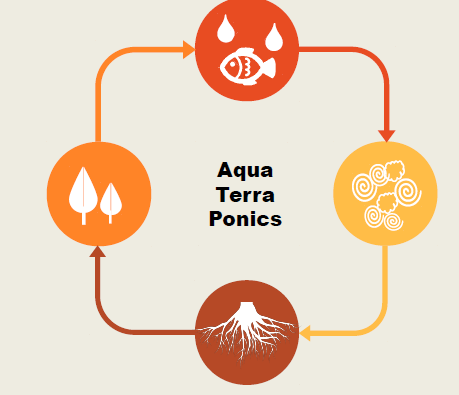
    TOP FARMERS is a business model designed by Blue Economy and based on the cycle of the nature:

    - vegetables, fruits and fish production
    - decentralized urban supply
    - integration of the cycle of the nature
    - healthy nutrition

    — 2 years ago
    #food 

    Exkursion in die Schweiz zum Vorbild Tropenhaus Wolhusen mit seinen vielgestaltige Formen, faszinierende Farben und wohlriechende Düfte tropischer Pflanzen und Früchte. Für unser Projekt ist es eine wichtige Grundlage professionelle Partner mit Erfahrung zu finden. Hier liegt ein Jahrzehnt Erfahrung vor und es ist gut es persönlich zu sehen und zu besprechen.  

    — 2 years ago with 2 notes
    #Schweiz  #Tropenhaus Wolhusen  #Food